

Meet the boutique strength and conditioning gym challenging London’s class-led fitness culture, and proving you don’t need to be a professional athlete to train like one.
Hidden just off New Bond Street, Dabbs Fitness is not immediately recognisable as a conventional gym.
There are no queues for equipment, no crowded changing rooms, nobody arriving simply to complete a workout before disappearing again. Training is appointment-led, coaches know every client, and the atmosphere is closer to a private performance facility than a commercial health club.
That distinction is deliberate.
Dabbs Fitness was founded in 2022 by James Dabbs to bring the principles of professional sport to people beyond the professional game.
James grew up playing and competing across a range of sports, including a short spell as a professional footballer in Spain. That experience, and the athletes and coaches he met along the way, shaped his approach to training. Strength, power, movement, conditioning and recovery were not separate pursuits. They were parts of a structured programme built around the individual.
Back in London, James struggled to find that same approach. Gyms were largely designed for general exercise or bodybuilding, while personal training often focused on short-term transformations. At the other end of the market, large group classes offered energy but little individual coaching. There was plenty of fitness, but very little training for performance.
Dabbs Fitness was created to fill that gap: a place where anyone could benefit from the expertise, structure and attention usually reserved for professional athletes.
You don’t have to be an athlete to train like one
The philosophy is straightforward. The principles used to prepare athletes can benefit everyone.
That does not mean treating every client like a professional footballer, or asking beginners to perform advanced exercises. It means applying the same level of thought to their training.
For one client, performance might mean preparing for a marathon, a ski season or a Hyrox. For another, it could mean a first pull-up, recovering confidence after an injury, or staying strong and independent into their seventies. The definition changes. The standard of coaching does not.
“We talk about the athlete as a mindset,” explains Dabbs. “It is not about your profession or current ability. It is about wanting to improve and being prepared to train with purpose.”
Personal training, made genuinely personal
Personal training sits at the heart of Dabbs Fitness.
New clients begin with an assessment and a conversation covering goals, training history, lifestyle and any injuries or limitations. Their coach then builds a programme around them.
A session might incorporate mobility work, speed or power development, primary strength, accessory exercises and conditioning. No two clients necessarily do the same thing. Exercises are chosen for what they help that person achieve, not because they happen to be popular.
This removes most of the guesswork that comes with going to the gym. Clients do not need to decide which workout to follow, whether to add weight, or how training should change around an injury, a busy month or an upcoming event. Their coach manages that and adapts it continually.
Progress is measured in terms that matter to the individual. Strength, movement quality, fitness, confidence and sporting performance can all count for considerably more than a number on the scales.
A different approach to semi-private training
Semi-private personal training combines individual programming with the energy of training alongside others.
Sessions are capped at four clients. Crucially, those four are not doing the same workout.
Each client follows their own programme under the guidance of a strength and conditioning coach. Someone training for a marathon might work alongside another client rebuilding strength after an injury and a third preparing for a skiing holiday.
It creates the atmosphere of a small training group without sacrificing personalisation, and it differs fundamentally from a fitness class, where the session is designed first and the people in the room are expected to fit themselves around it.
At Dabbs, the individual comes first.
The gym also runs a limited selection of coached strength and conditioning sessions, alongside private corporate training and sporting events. Personal and semi-private training remain the foundation of the business.
The coaches behind the programme
Dabbs has deliberately built its team around strength and conditioning expertise rather than personality-led fitness instruction. The coaches include MSc-qualified practitioners with experience across professional football, NCAA American football, athletics, rehabilitation and performance development.
That expertise matters because good programming is rarely about finding the most complicated exercise. It is about making the right decision for the person in front of you: knowing when to progress, when to adapt, and when simplicity will do more than complexity.
The clearest demonstration of what the team actually believes is this. Nearly every coach at Dabbs insists that their own parents strength train.
There is no commercial reason to do it. A parent cannot be upsold, will not be impressed by your qualifications, and will tell you at length when they think you are talking rubbish. Persuading them takes nothing but conviction.
“We want our parents to enjoy longer lives,” says Dabbs. “But more importantly, we want those years to remain active and full. That is what strength training is ultimately for.”
Built for Mayfair
Despite its performance credentials, Dabbs Fitness does not resemble a stark professional training centre.
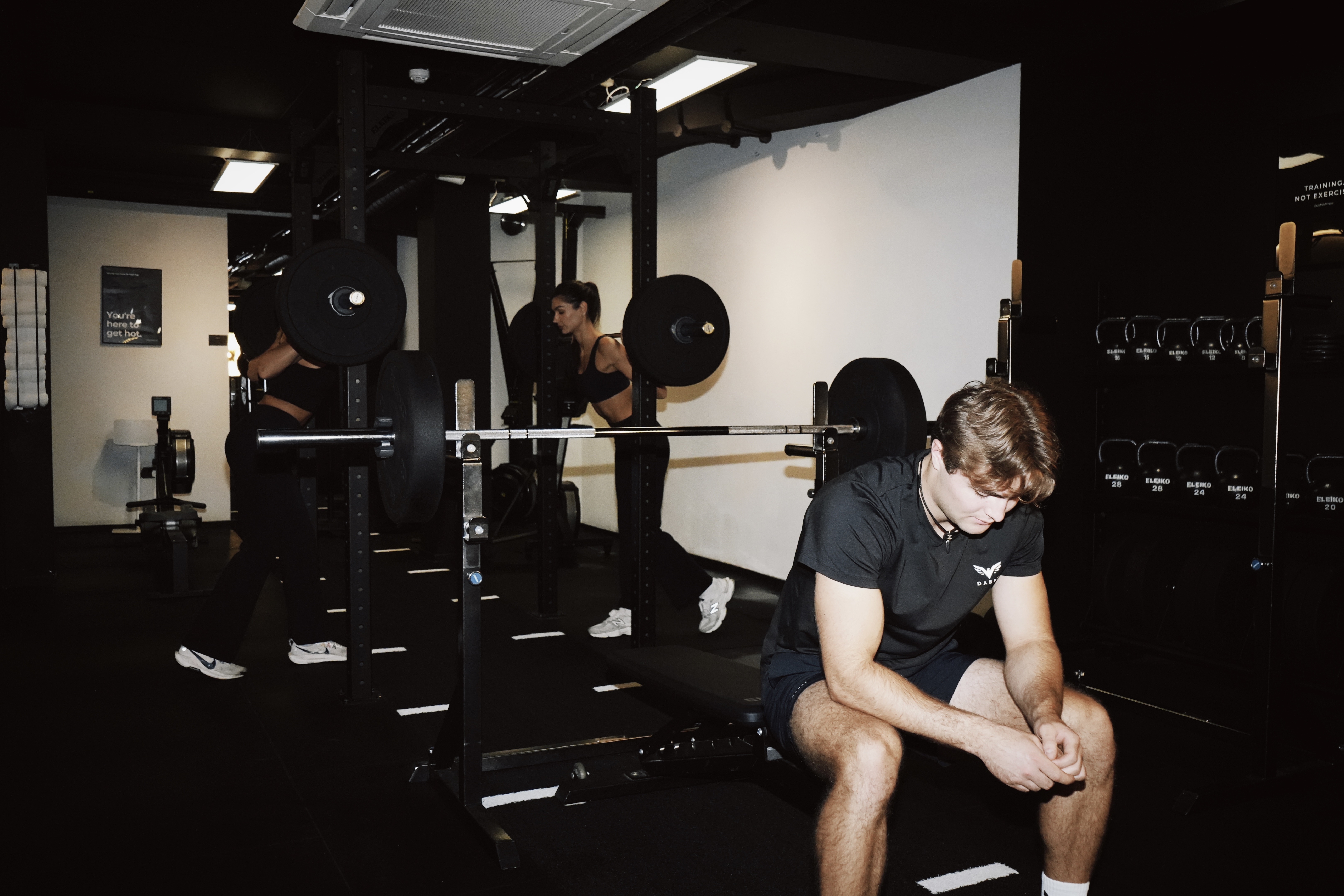
The Mayfair gym pairs serious equipment and expert coaching with a discreet, refined environment. It is intimate, appointment-led and free from the anonymity of a large health club. Capacity is deliberately limited, which is what allows coaches to know clients beyond the hour they spend on the gym floor.
Its members include local corporates, residents, executives, athletes and international visitors. Some arrive with significant training experience; many do not. What connects them is not athletic status but an expectation of quality and a desire to use their time well.
It is luxury expressed through attention, expertise and consistency rather than excess.
Beyond the gym floor
Community has become an increasingly important part of the business.
Through the Dabbs Fitness Sports Club, clients can join track sessions, races, Hyrox events and other sporting challenges. The gym also works with neighbouring businesses on private training, employee assessments and wellbeing events.
These give members a reason to apply their training outside the gym, and a way to redefine what they believe they are capable of. For someone who has never considered themselves athletic, a first race or a first track session can represent a genuine shift in identity.
That reflects the wider ambition behind the brand. Fitness does not need to be punishment for what someone ate, an endless pursuit of exhaustion, or a short-term attempt to change an appearance. It can be the deliberate development of a stronger, more capable person.
Training for the long term
The value of this becomes clearest as clients get older.
A squat is not useful simply because it is a gym exercise. It builds the strength to stand from a chair, climb stairs and control the body safely. A loaded carry prepares someone to manage bags and objects outside the gym. Pushing, pulling and lifting develop capacities that daily life keeps demanding long after anyone stops deliberately training them.
Dabbs does not promise a shortcut to longevity. The focus is more practical: building and preserving the physical capacity required to enjoy a life.
Athlete is a mindset
Dabbs Fitness occupies a distinctive position in London’s crowded fitness landscape. It is neither a mass-market gym nor a class-led boutique studio. It does not imitate a professional sports facility, and it does not ask clients to reorganise their identity around fitness.
It takes the intelligence, structure and coaching standards of elite performance, and applies them to individual lives.
You do not need to be a professional athlete to benefit from training like one. You simply need to be coached with the same level of thought.